
Riverbank, Manteca
Garage Door Repair for Riverbank's 1990s-Built Homes
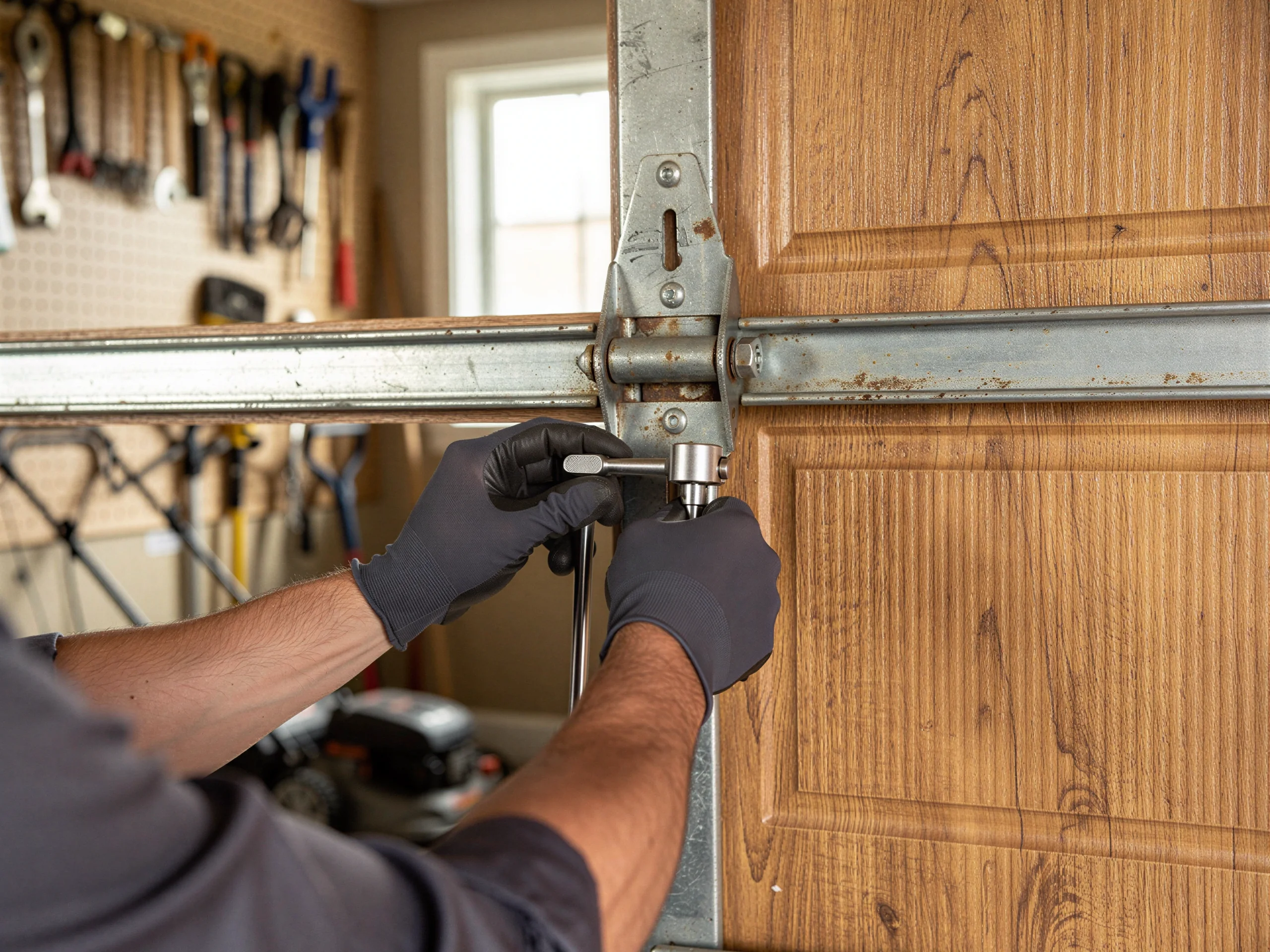
Riverbank homes mostly date to the mid-1990s, which means original steel rollers and factory openers are often still in place. We drive out from Manteca to fix them.
The Symptom
Riverbank's housing stock centers on 1996, which puts most garage doors here at close to thirty years old without ever having been touched. That's long enough for the original rollers to have gone from nylon to crumbling plastic, for the factory-installed opener to be on its second or third logic board failure, and for the torsion spring - rated for a set number of cycles - to be sitting right at the edge of its life.
Stutter, drop, or stall
The symptom that brings people to the phone is usually one of three things: the door stutters partway up and reverses, it drops the last foot instead of settling, or the opener runs but the door doesn't move at all.
Original parts, never touched
On a house this age, the odds are good that whatever's failing is the same part that went in when the house was framed. Nobody's touched it since, because nothing forced them to - until now.
Same-window doors failing together
Across the roughly 7,266 households in Riverbank, this is less a quirk than a pattern: a wave of doors from the same construction window reaching the same failure points around the same time.
What Causes It Around Here
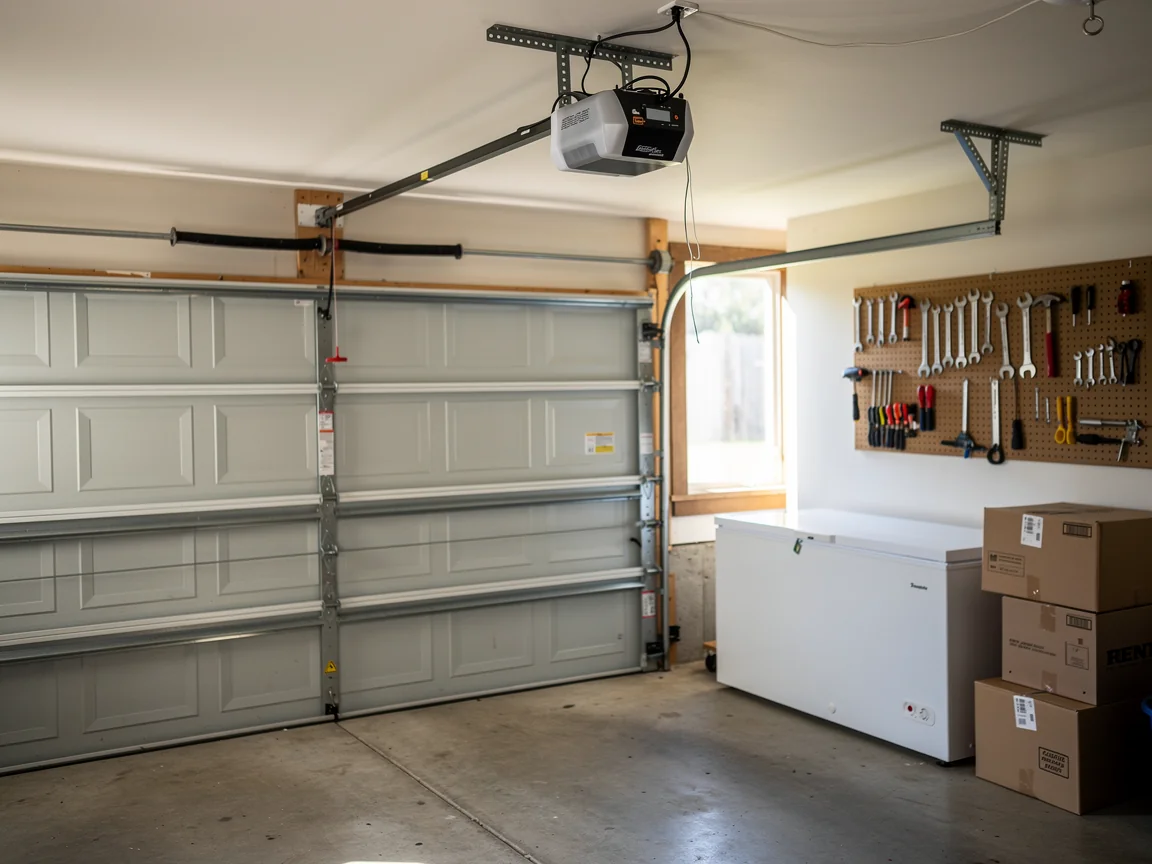
A door installed in the mid-1990s was built to a different spec than what goes in a new garage today - lighter-gauge track, a single torsion spring instead of two, and steel rollers that rattle louder every year they run. Add the region's HEAT-moderate climate and you get steel that expands and contracts enough, season after season, to work bolts loose at the track brackets and dry out whatever lubricant was on the spring from the factory. We're not talking about a storm-damage call here - this is slow fatigue, not sudden failure, and it shows up as noise long before it shows up as a stuck door. Riverbank's median household income, just over $90,000, also means a fair number of these original openers are the chain-drive units that came standard with a mid-90s build - reliable, but not built with the safety reversal sensors or battery backup that later code required. When one of those finally quits, it's often not a quick part swap; it's a full opener replacement because the mounting and wiring don't match anything made today.
What the Repair Takes
Most calls here split into two kinds of jobs. The first is a spring or roller swap - we show up, confirm which spring size and wind direction the door actually needs (not every door from this era used the same spec), and have it back in service the same visit.
Thermal cycling wears all evenly
The second is bigger: the opener itself is original, and at that age the logic board or motor just stops, not because of one bad part but because thirty years of thermal cycling and dust have worn everything evenly.
Patching would fail again
In that case, repairing it isn't worth it - replacing the opener is the honest answer, and we'll say so instead of patching something that'll fail again in six months.
Bring likely parts first trip
We drive out from Manteca, about 16 miles away, so we're not doing walk-up diagnostics twice; we bring the parts most likely to be needed for a door this age on the first trip, based on what you describe on the phone.
What Is on the Truck
For a service area where the bulk of doors cluster around a late-1990s build year, the truck carries what that generation of door actually needs: standard torsion springs in the common sizes for a single or double door from that era, steel rollers to replace the originals, and the trim and seals that dry out and crack after decades in the sun. We also carry a stock of modern chain-drive and belt-drive openers, because when a factory 1990s unit fails for good, there's rarely a compatible replacement part - the whole head unit gets swapped. What we don't carry is speculative parts for doors we haven't seen; a quick description over the phone tells us enough to load the right spring size and roller type, but we won't guess on an opener model without a look at it first.
Doing It Yourself
A torsion spring under tension is not a DIY repair - it's the single most common source of serious injury in garage door work, and that doesn't change because your house is newer than your neighbor's. What you can check yourself: the photo-eye sensors near the floor (dust or a knocked bracket is a common, harmless cause of a door that won't close), and whether the door moves freely with the opener disconnected - if it binds by hand, the problem is mechanical, not electrical. Beyond that, especially on a door old enough to have its original 1990s hardware, call it in rather than open the housing yourself.
Questions
Common questions
Why does my garage door opener keep failing if it's never been replaced?
If your house dates to the mid-1990s like most of Riverbank, the opener is likely original. Logic boards and motors in that generation weren't built to run past 25-30 years, and once the board starts failing it's usually intermittent before it's total - which is the stage most homeowners are in when they call.
Do you have a shop in Riverbank?
No. We're based in Manteca and drive out to Riverbank, about 16 miles, for service calls. There's no local branch or drop-in counter here, so repairs are scheduled rather than walk-in.
Is it worth repairing a 1990s opener or should I replace it?
Depends what's wrong. A dead remote or a misaligned sensor is a quick fix. A failed motor or logic board on a unit this old usually isn't worth patching - parts for that generation are hard to source and a new opener often costs less than chasing the old one's problems.
How do I know if it's the spring or the opener?
Try moving the door by hand with the opener disconnected. If it's heavy, uneven, or won't stay up on its own, that's spring tension, not the opener. If it moves freely by hand but the opener won't run it, the fault is electrical.
Explore more
More Services in Riverbank
Garage Door Service
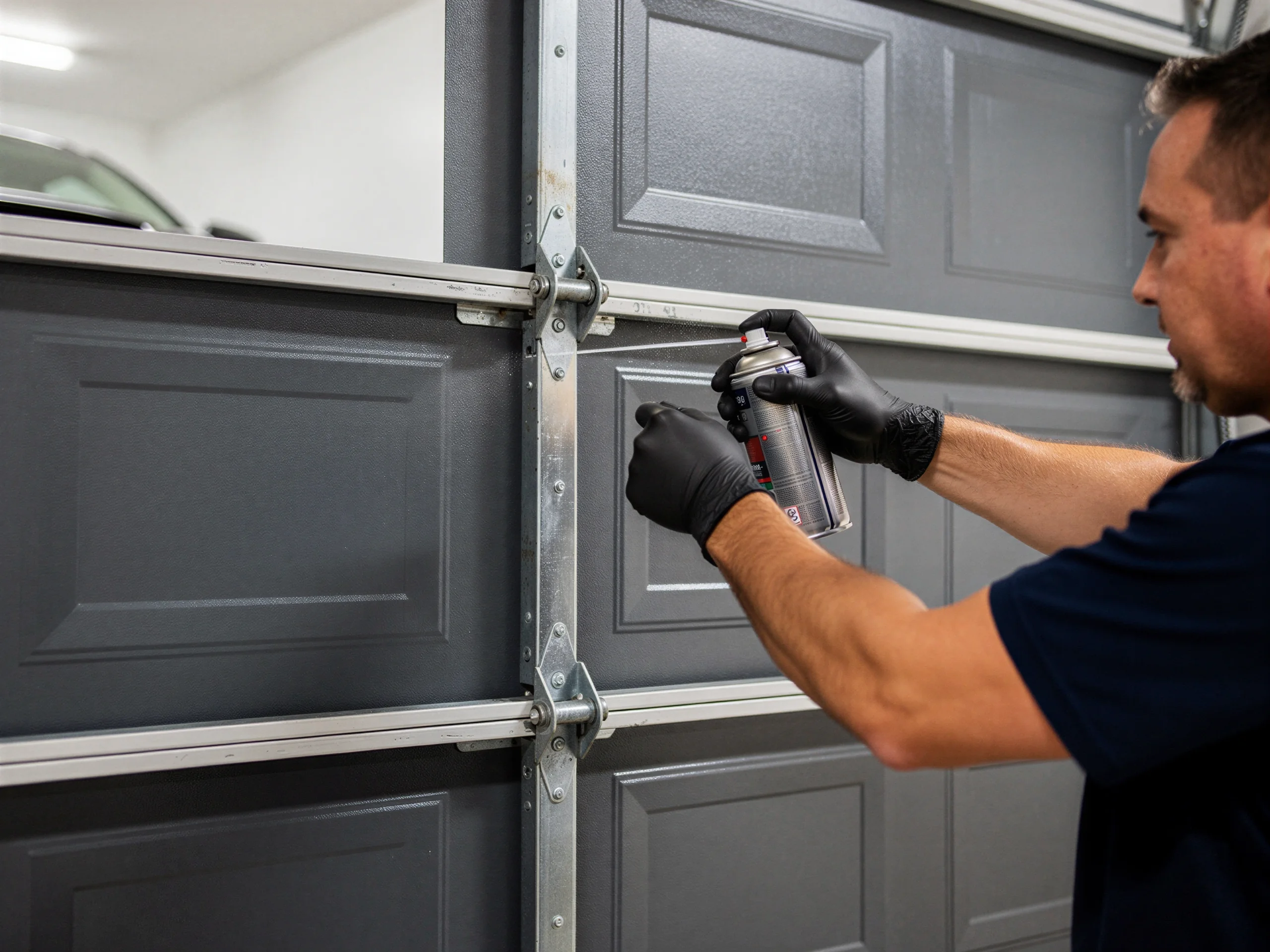
Riverbank homes mostly date to the mid-90s, so the doors and openers are steel sectional with factory torsion springs. Learn more →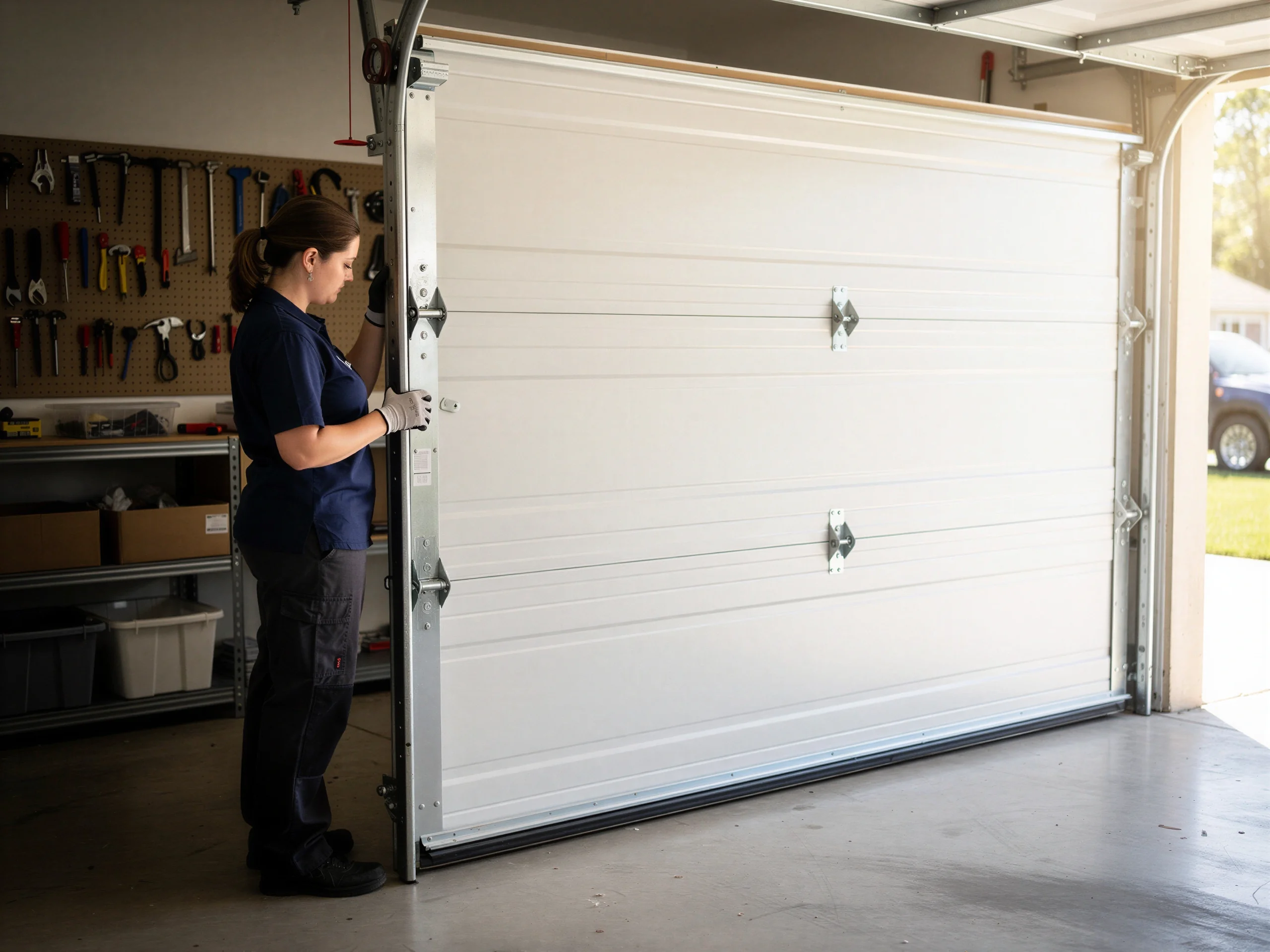
New Door Installation
Riverbank's homes mostly went up around 1996, a generation newer than most of the service area. Learn more →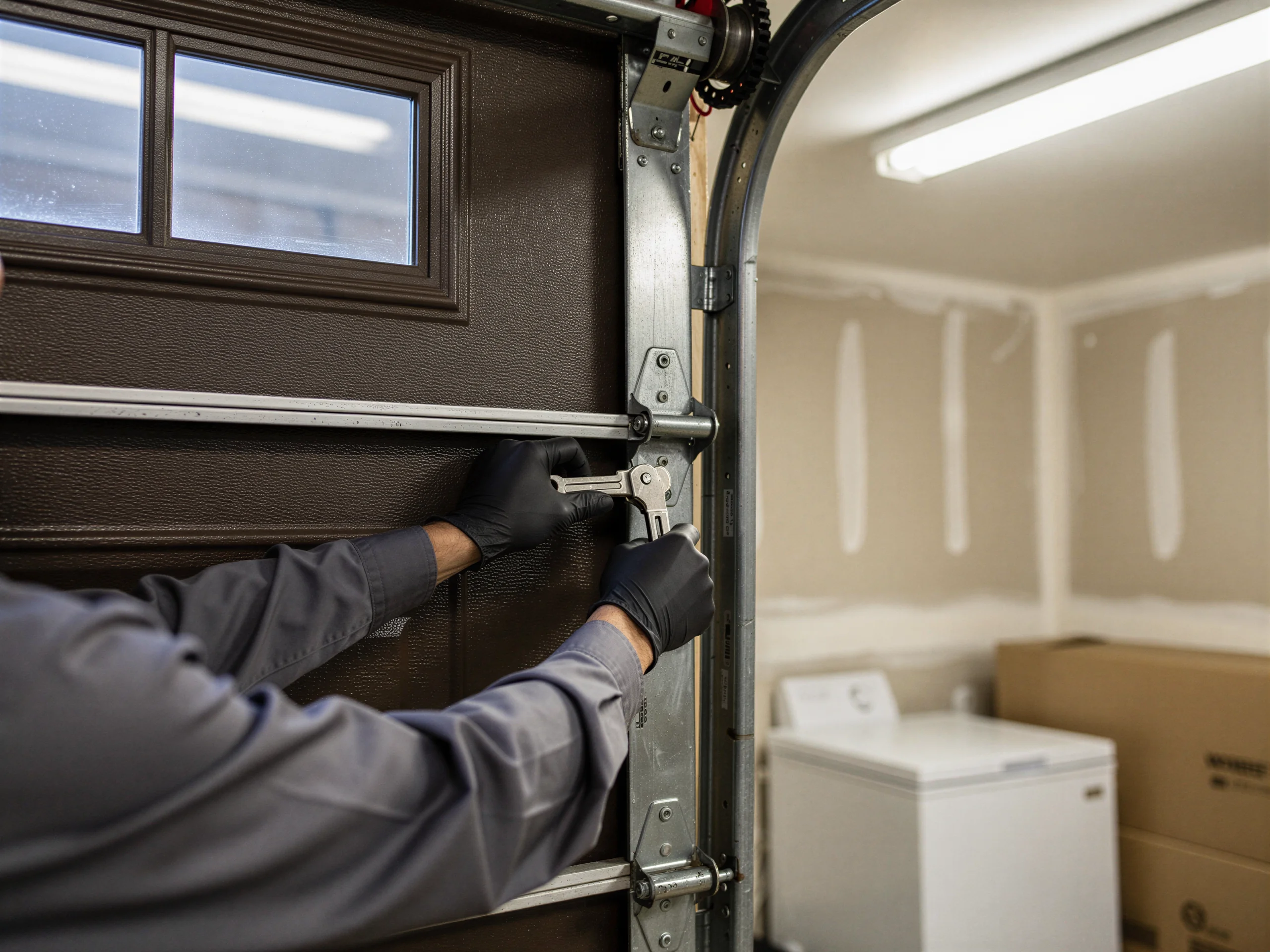
Off Track Repair
Off-track garage door repair for Riverbank homes, most built in the 1990s. Learn more →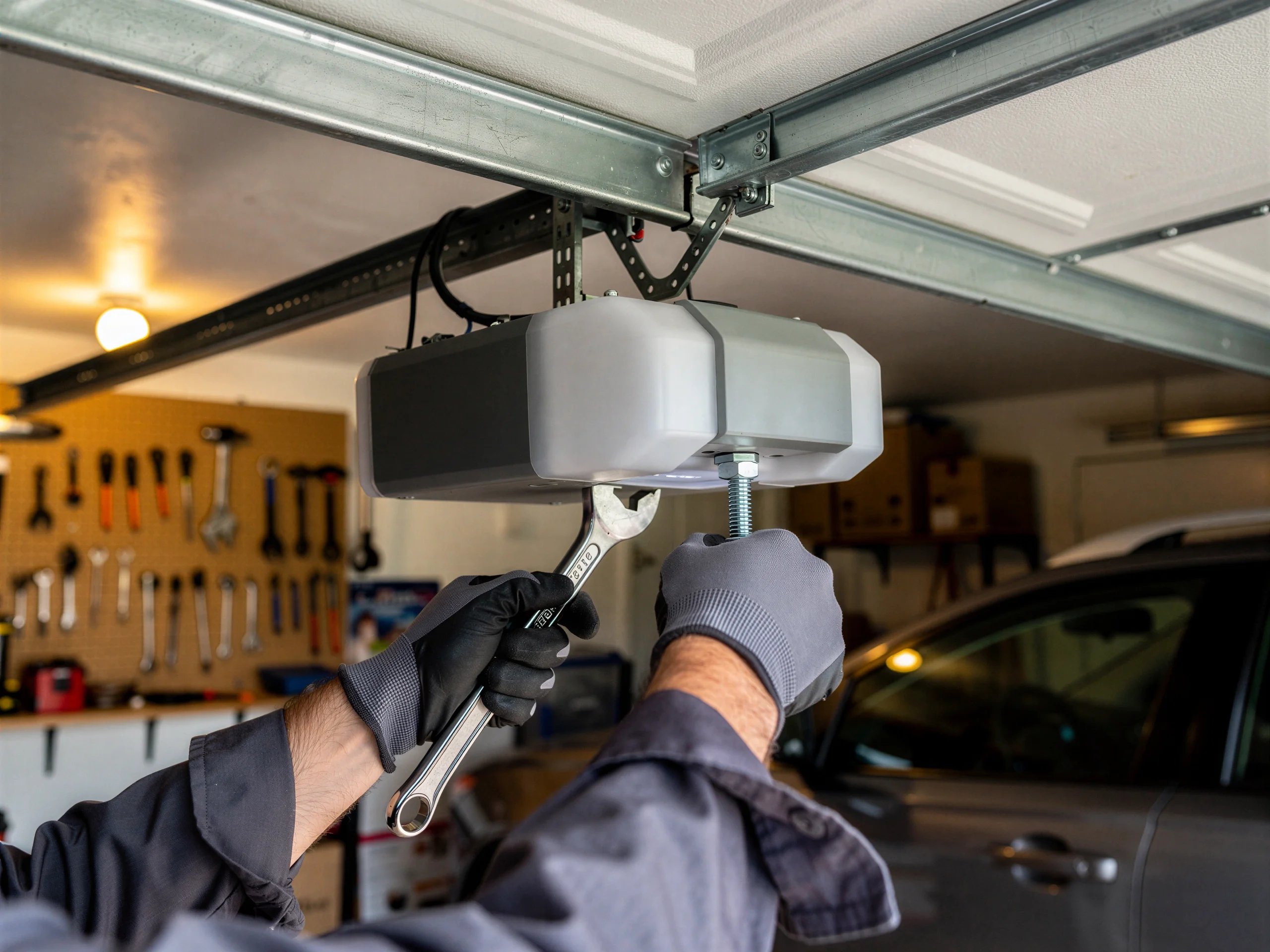
Opener Installation
Riverbank homes went up mostly in the mid-1990s, newer than the rest of Manteca Garage Door Pros' service area. Learn more →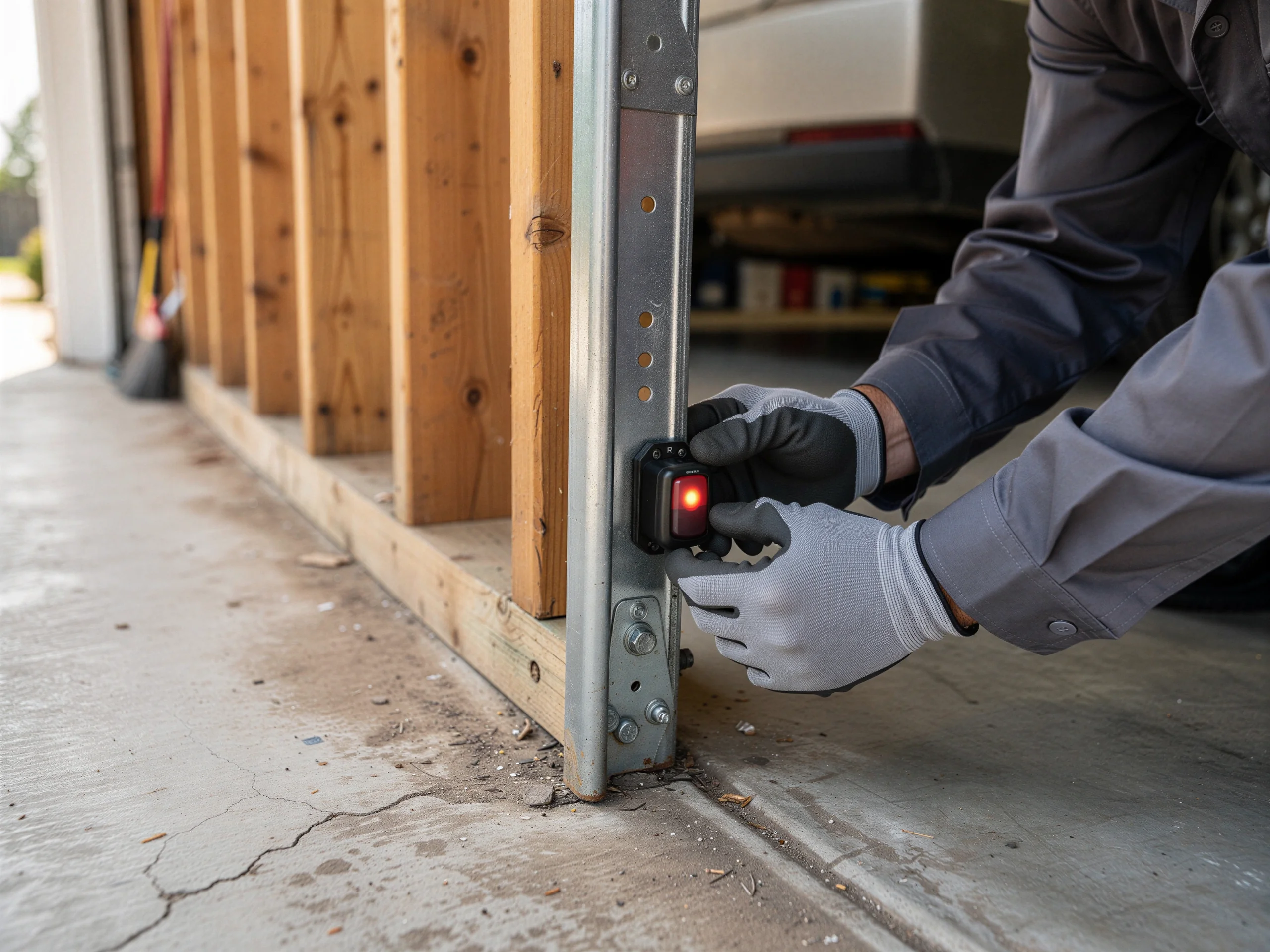
Opener Repair
Opener repair for Riverbank, CA homes built mostly around 1996. Learn more →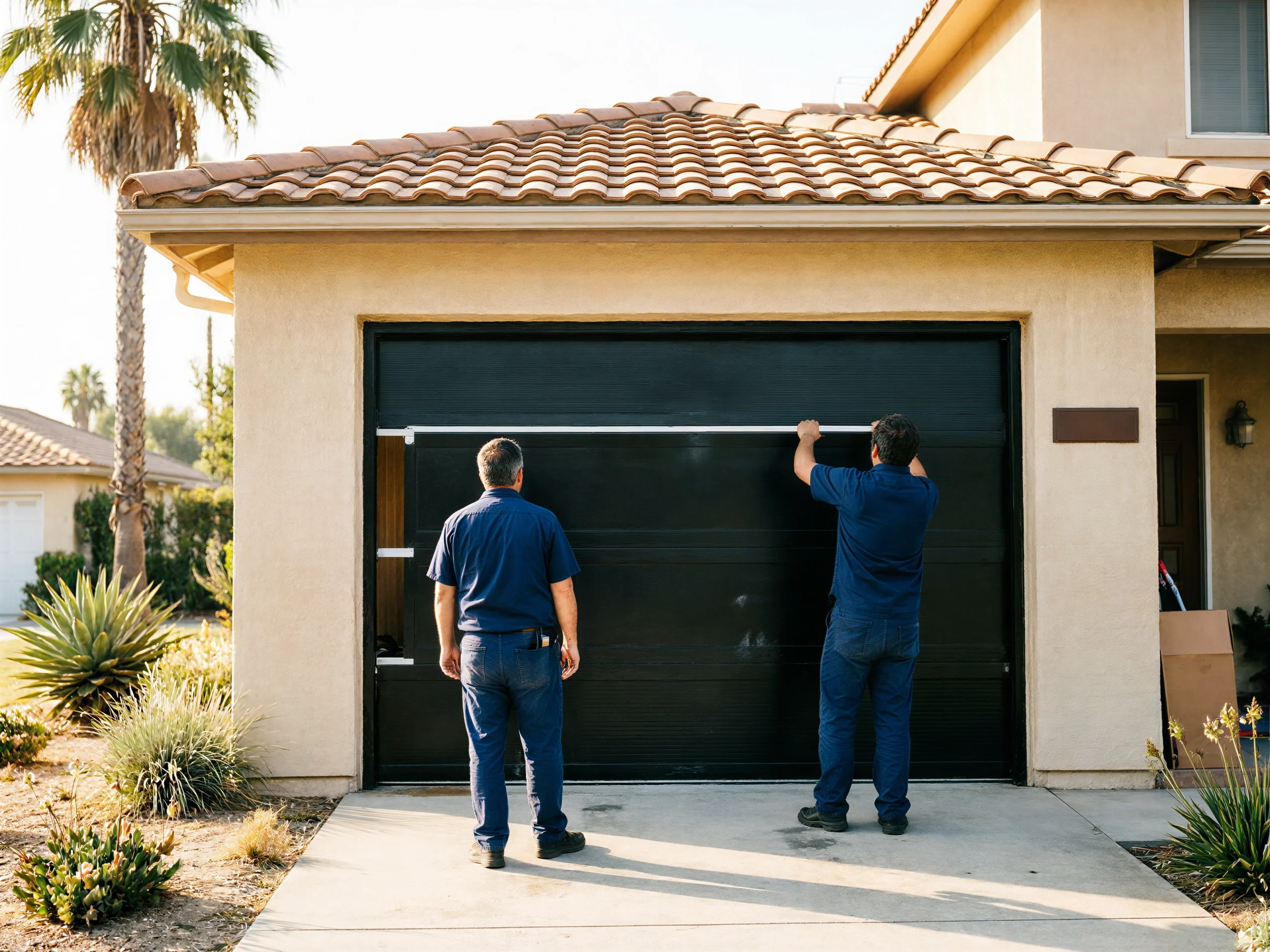
Panel Replacement
Riverbank's garage doors mostly date to the mid-1990s, a different era than much of Manteca's service area. Learn more →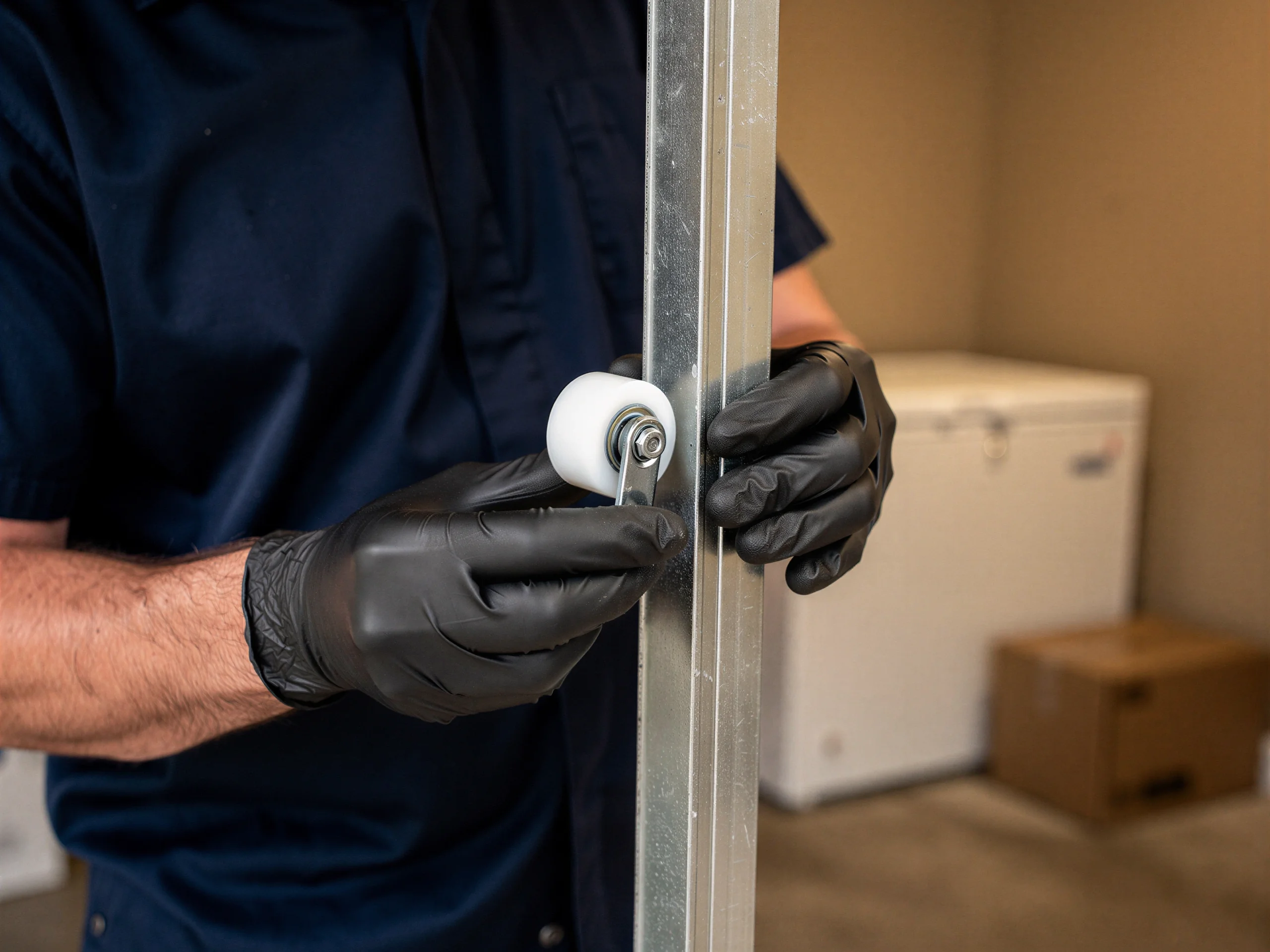
Roller Replacement
Riverbank homes built mostly in the 1990s are hitting original-roller age now. Learn more →Ready when you are
Garage door trouble in Riverbank?
Manteca Garage Door Pros repairs and installs garage doors, springs and openers in Manteca, CA and the surrounding area.