
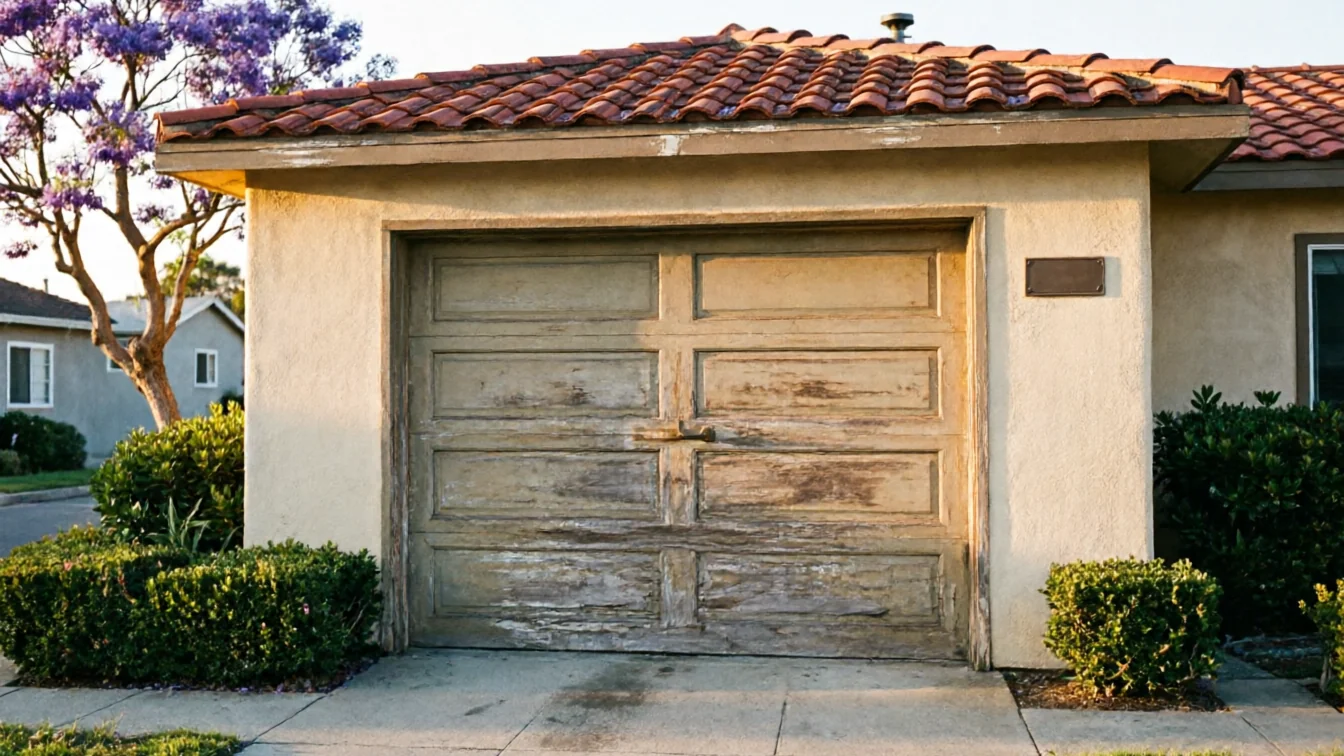
Is Your Older Manteca Garage Door Worth Fixing
Manteca's housing stock runs 1938 to 2010, median 1968 - here's how to tell if your older garage door is worth repairing or past it.
Read moreManteca's housing stock runs 1938-2010, median year 1968 - before current insulation codes. Here's what that means for your garage door panels, seals, and springs.
Local detail
Manteca's housing stock spans 1938 to 2010, but the median build year lands at 1968, and most of the stock across the nineteen named areas we see work in - places like Lathrop, French Camp, Ripon, and the rest of that ring - dates to the 1960s and '70s. That matters for garage doors because insulation and weatherstripping standards for residential doors weren't part of most local codes back then. A door installed, or even replaced once, on a 1968 house was often a single uninsulated steel or wood panel with minimal seal around the perimeter. The climate here runs moderate on heat exposure rather than extreme, so you're not fighting the kind of summer swings that crack panels outright in harsher desert zones. But moderate heat still pushes through an uninsulated door all day, and on a garage that shares a wall with living space, that difference shows up on the thermostat. The age of the housing stock, not the weather alone, is what drives most of what we find when we open up a door panel in this area.
The area
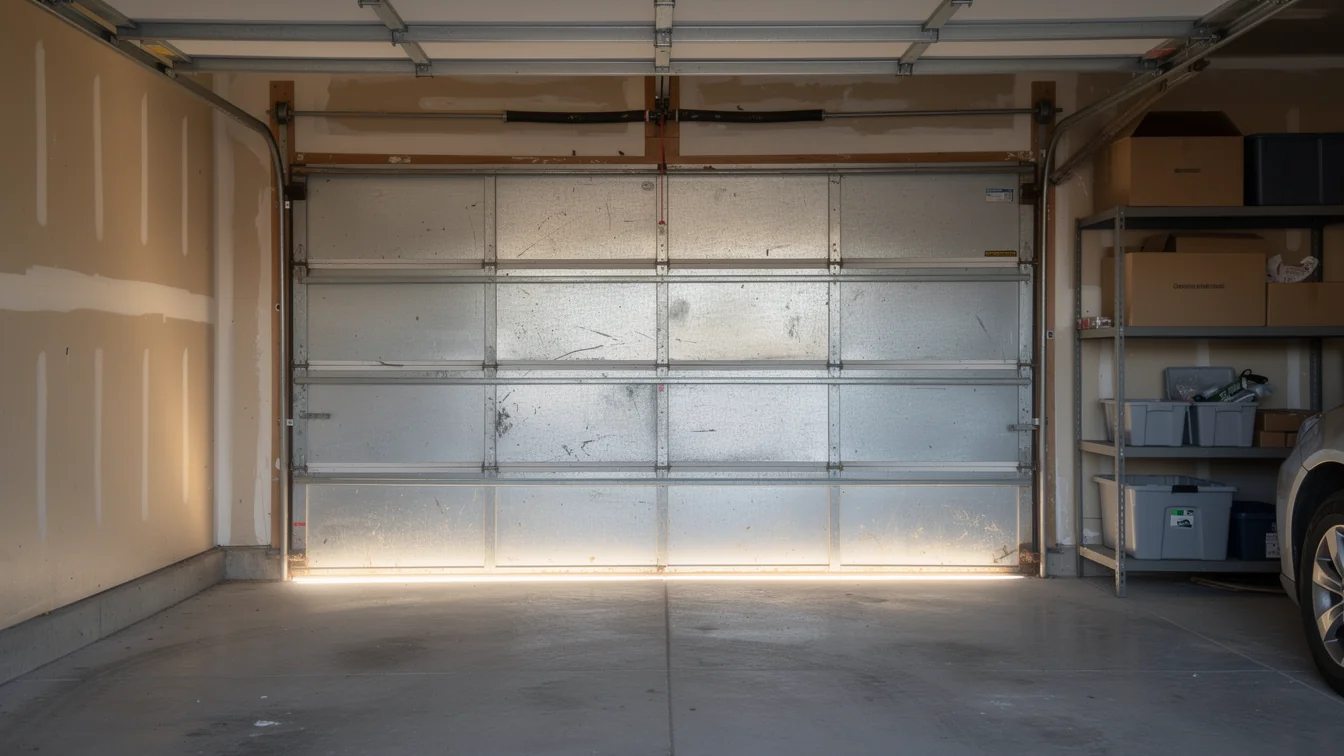
Start with the panel itself. If the door is original to a house built in that 1960s-70s window, pop open the access panel or check the edge thickness - a single layer of steel with no visible foam core is the tell. Next, look at the bottom seal and the side stops. On doors this old the rubber has usually hardened and shrunk away from the frame, leaving gaps you can see daylight through. Check the weatherstripping where the door meets the jamb on both sides; it dries out faster than people expect because it's never been replaced. Last, run a hand along the inside of the panel on a warm afternoon - if it's hot to the touch, there's no insulation layer doing any work. None of this requires tools beyond a flashlight and twenty minutes. The spring and track hardware on these older installs is usually standard enough that we can source parts, but the panel itself is a different story once it's original to the house.
What we find
An uninsulated panel on a house built before insulation rules were standard doesn't fail the way a spring or cable fails - it doesn't break, it just underperforms, quietly, for decades. The garage runs warmer than it should in the afternoon, that heat transfers through a shared wall or ceiling, and the HVAC system works harder than the house's build year would suggest it needs to. Because the stock here skews so heavily to that 1960s-70s window across the service area, this isn't a one-off issue - it's the baseline condition for a large share of the doors we look at. The honest limitation: we can't retrofit insulation into an old single-layer steel panel. Foam-injected replacement panels exist, but they're matched to specific door models, and on a door this old, finding an exact match panel usually isn't realistic. At that point the choice isn't repair versus no repair, it's full door replacement versus living with what you have.
How we work
You don't have to replace an old door the day you notice it's uninsulated. If the springs, rollers, and track are sound, there's no safety reason to act today - an uninsulated panel is a comfort and energy issue, not a structural one. What's worth watching is the seal. Hardened weatherstripping lets in moisture as well as heat, and moisture against an old steel panel from a house built in that 1938-2010 range is what eventually causes rust at the bottom edge, which is a real repair cost later. If you're not ready to replace the door, at minimum replace the bottom seal and side stops - that's a small job that buys time. When you are ready to weigh replacement, it's worth doing with the house's age in mind rather than just matching what's there now.
Questions
Depends on what's wrong. Springs, cables, rollers, and openers can usually be repaired or swapped regardless of the door's age. But if the panel itself is original to a house from the 1960s or '70s and uninsulated, there's often no matching replacement panel available - at that point repair isn't really an option for the panel itself, only for the hardware around it.
Not urgent in the sense of damage risk - this area sits in a moderate heat band, not an extreme one. But moderate heat every day, for months, still pushes through an uninsulated panel and into any shared wall. It's a slow cost, not a sudden one, which is why most owners fix the seals first and weigh full replacement later.
Check the build year of the house against the door. Local housing here runs 1938 through 2010, with most stock from the 1960s and '70s - if your house falls in that range and the door looks original, assume no insulation layer. Opening the access panel or checking edge thickness confirms it in a couple of minutes.
Recommendation
More garage door guides for Manteca homeowners.
Manteca's housing stock runs 1938 to 2010, median 1968 - here's how to tell if your older garage door is worth repairing or past it.
Read more
When the power goes out in Manteca, your garage door opener stops working too.
Read more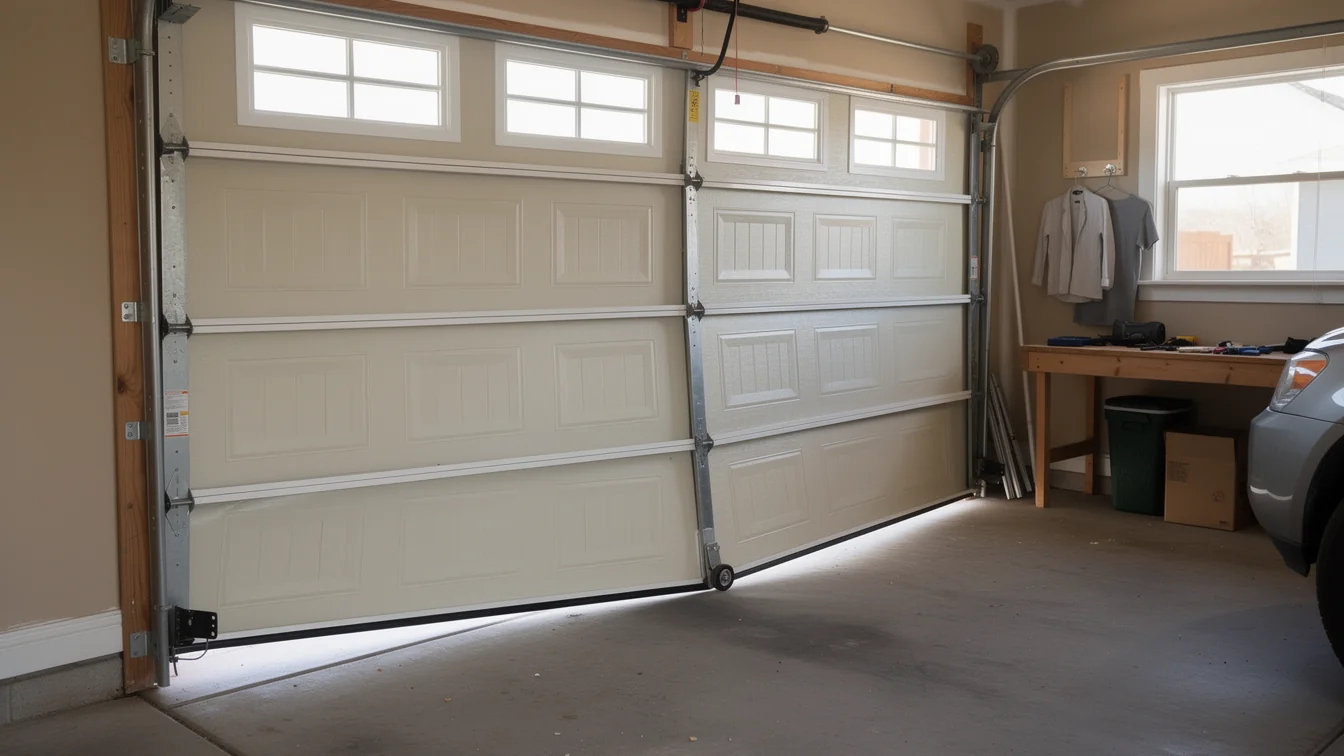
Manteca's older housing stock and moderate heat put real strain on garage door track.
Read moreReady when you are
Manteca Garage Door Pros repairs and installs garage doors, springs and openers in Manteca, CA and the surrounding area.